Buying · 6 min · 27 September 2026
Seat Depth: The Measurement That Decides Comfort
Seat depth decides whether you sit up or slide forward. It is measured cushion to cushion, and it matters more than any word used to describe comfort.
The short answer
Measured from the front edge of the seat cushion to the face of the back cushion: 21 to 23 inches sits upright, 24 to 26 inches is the versatile middle, and 27 inches and above is a lounge. Check the gap behind your knee with your back against the sofa.
Of every number on a sofa specification, seat depth is the one that decides whether you sit properly or slide forward after twenty minutes. It is also the number most often left out of product listings, which is why so many sofas are bought on looks and end up in a spare room.
How it is measured
Seat depth runs from the front edge of the seat cushion to the face of the back cushion at seat level, not to the back rail of the frame. The difference matters: a deep frame with a thick back cushion can have a shallow seat, and a slim frame with a thin cushion can sit deeper than it looks. Ask for the cushion-to-cushion figure. An overall depth figure tells you how much floor the sofa takes, not how you will sit on it.
The three ranges
21 to 23 inches is upright. Most adults sit with both feet flat and the back supported without a pillow, which makes it right for a formal room, a room used for conversation, or anyone with knee or hip trouble. 24 to 26 inches is the middle: comfortable upright, and deep enough to tuck one leg up. 27 inches and above is a lounge. It is genuinely comfortable for reading and films, and it needs a generous room and a longer leg to be used as intended.
Your height matters more than your taste
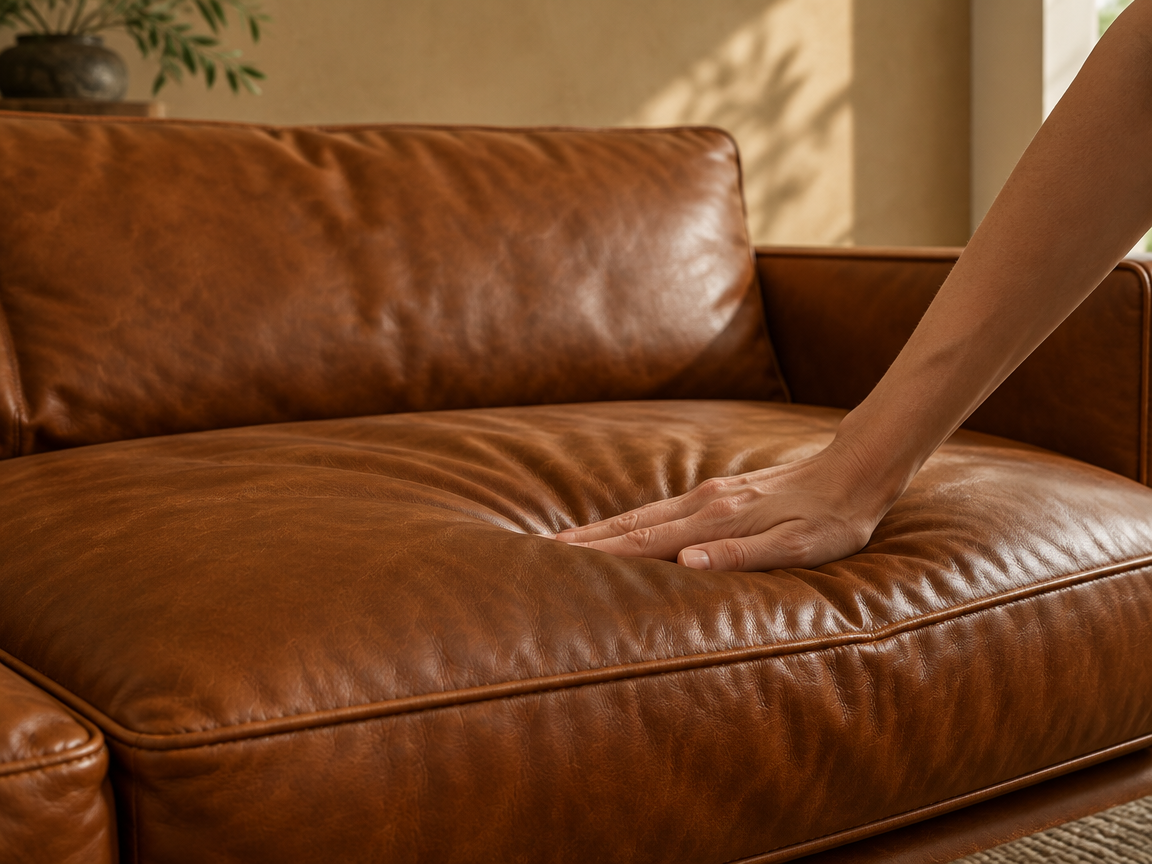
The test is simple. Sit back with your feet on the floor and look at the space behind your knees. A hand's width of space means the seat is at the right depth for you. If the front edge presses behind the knee, the seat is too deep: your legs will not reach the floor properly and you will perch forward. If the cushion ends well short of your knee, the seat is shallow and you will feel unsupported rather than perched.
The deep-seat compromise
Deep sofas are not a mistake, they are a posture. The usual fix is a large, firm back cushion that brings the effective seat forward by three or four inches when you want to sit up, and moves behind you when you want to lie down. It works, but only if the back is high enough to carry a substantial cushion.
Seat depth and the room
Depth adds to the floor a sofa occupies before it adds to comfort. A 40 inch overall depth in a room twelve feet wide leaves a narrower walkway than a 36 inch one, and the bulk of a deep sofa in a small room reads as crowding however comfortable it is. Measure the wall and the walkway first, then the seat.
Test it before you buy
Sit for ten minutes rather than ten seconds, in the position you would really use, and notice whether you have shifted to avoid a pressure point. Then check the numbers against your own body rather than against the adjectives on the page.
Keep reading