Buying · 8 min · 18 September 2026
How to choose a leather sofa
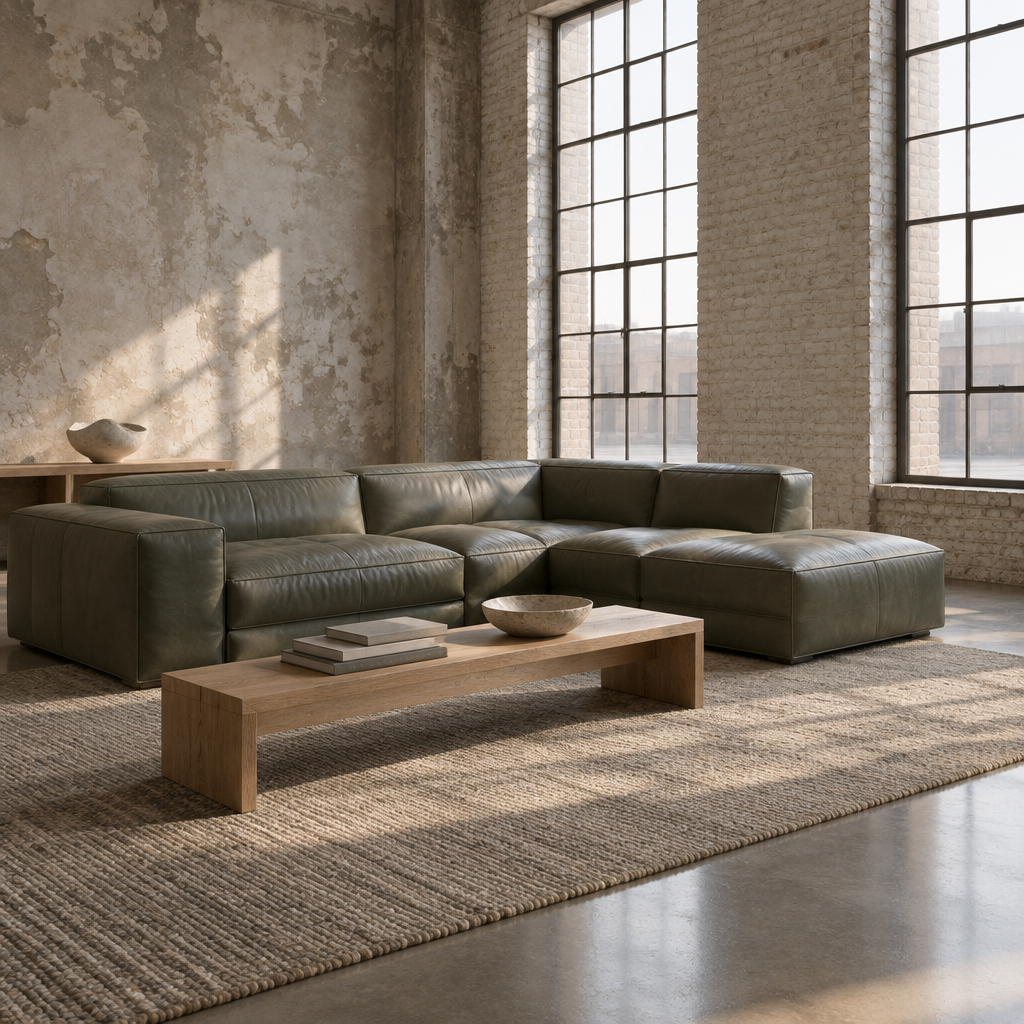
Choose the room first, the seat depth second and the leather third. Everything else follows from those three decisions.
The short answer
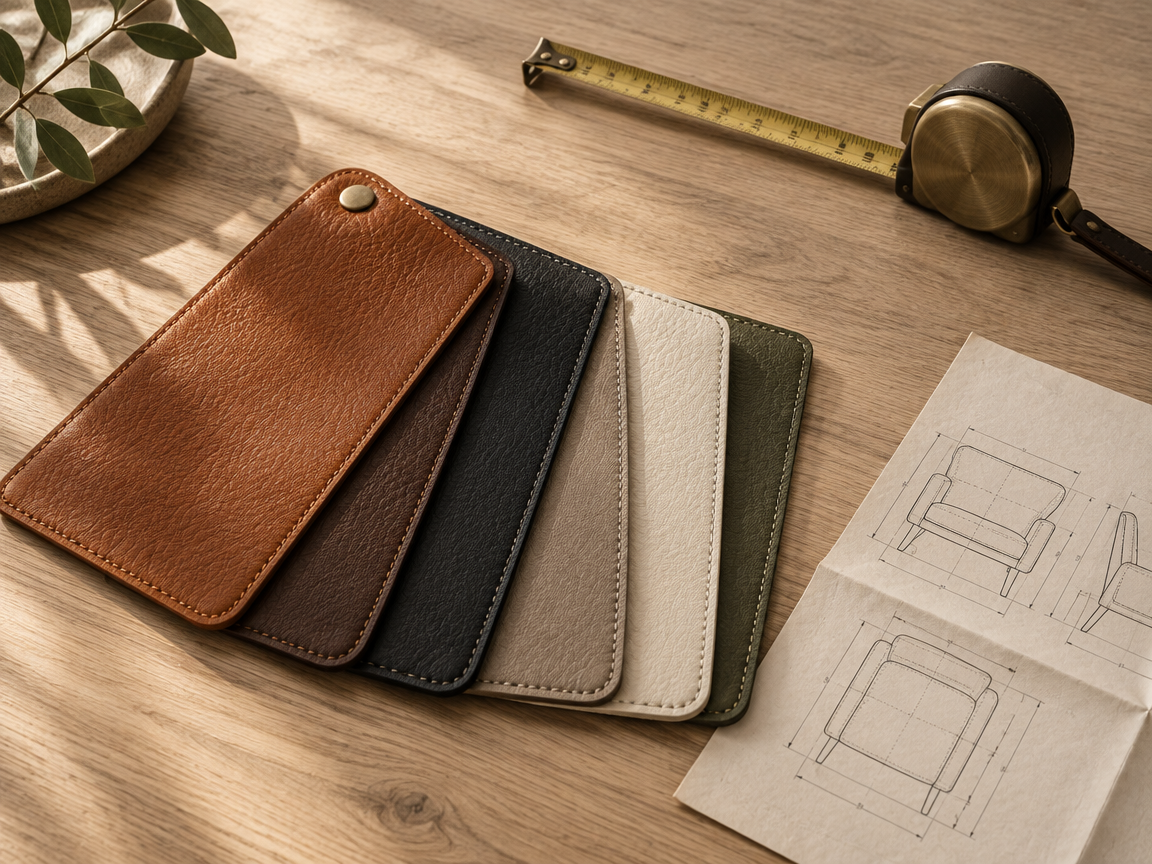
Start with the room: measure the wall and leave a 30" walkway. Then choose seat depth — 22"–24" to sit upright, 25"–27" to lounge. Choose leather last, once you know how much sun, traffic and maintenance the piece will see.
Most leather sofa purchases go wrong in the same way. The sofa is bought for how it looks in a showroom, then lives in a room with different light, a different wall length and a different idea of comfort. The order in which you make the decisions matters more than the decisions themselves.
1. Measure the room before the sofa
Mark the sofa's footprint on the floor with tape. Leave 30 inches of clear floor in front of it if people need to walk past — 36 inches if it is the main route through the room. Then check the space at either end: a sofa that touches both a wall and a doorway reads larger than it is.
2. Decide how you actually sit
Seat depth is the number that decides whether a sofa is comfortable for you, not the seat height or the cushion count. At 22 to 24 inches you sit upright with your feet on the floor — good for talking, reading and guests. At 25 to 27 inches you sink back and need a cushion behind you to sit upright. Both are correct; they are for different evenings.
Sit in the position you normally take, and check where your knees fall relative to the front edge of the cushion. If the edge presses behind the knee, the seat is too deep for your height.
3. Choose leather by how the room is used
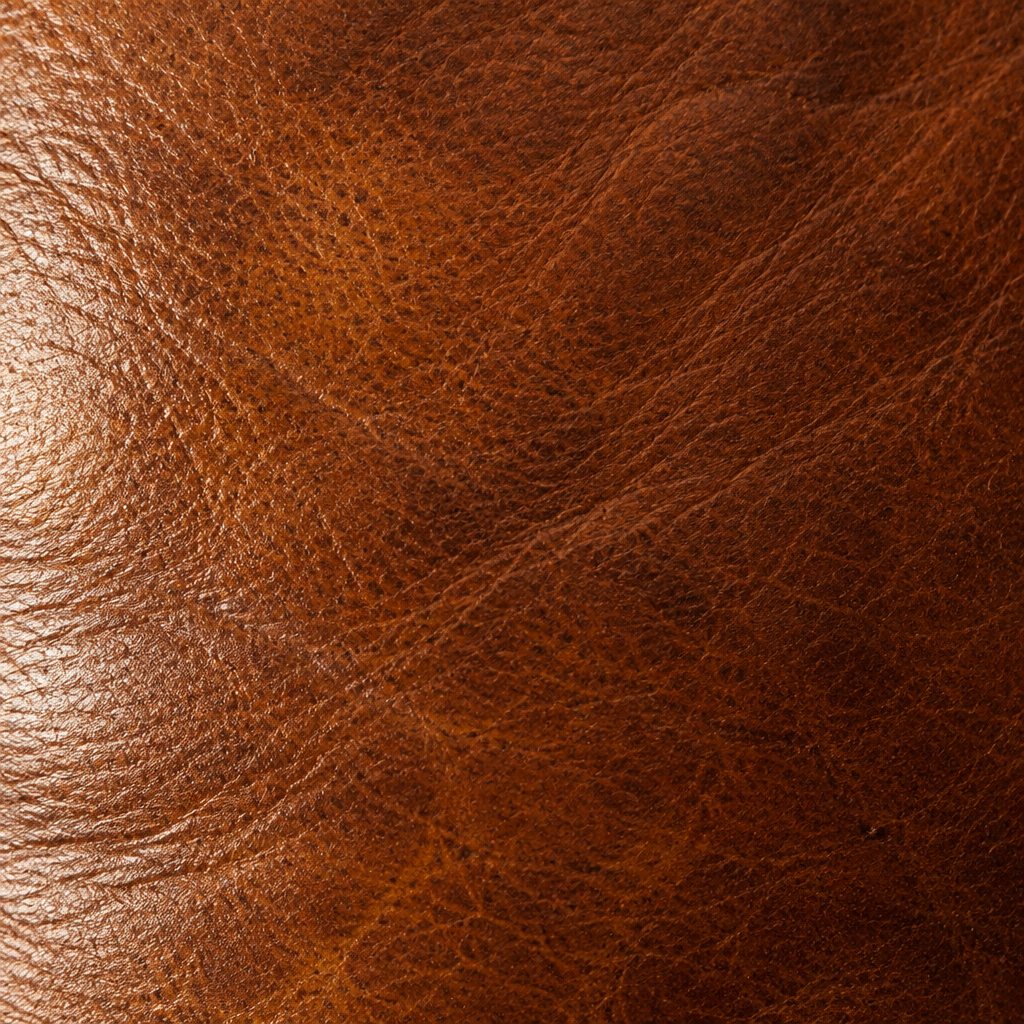
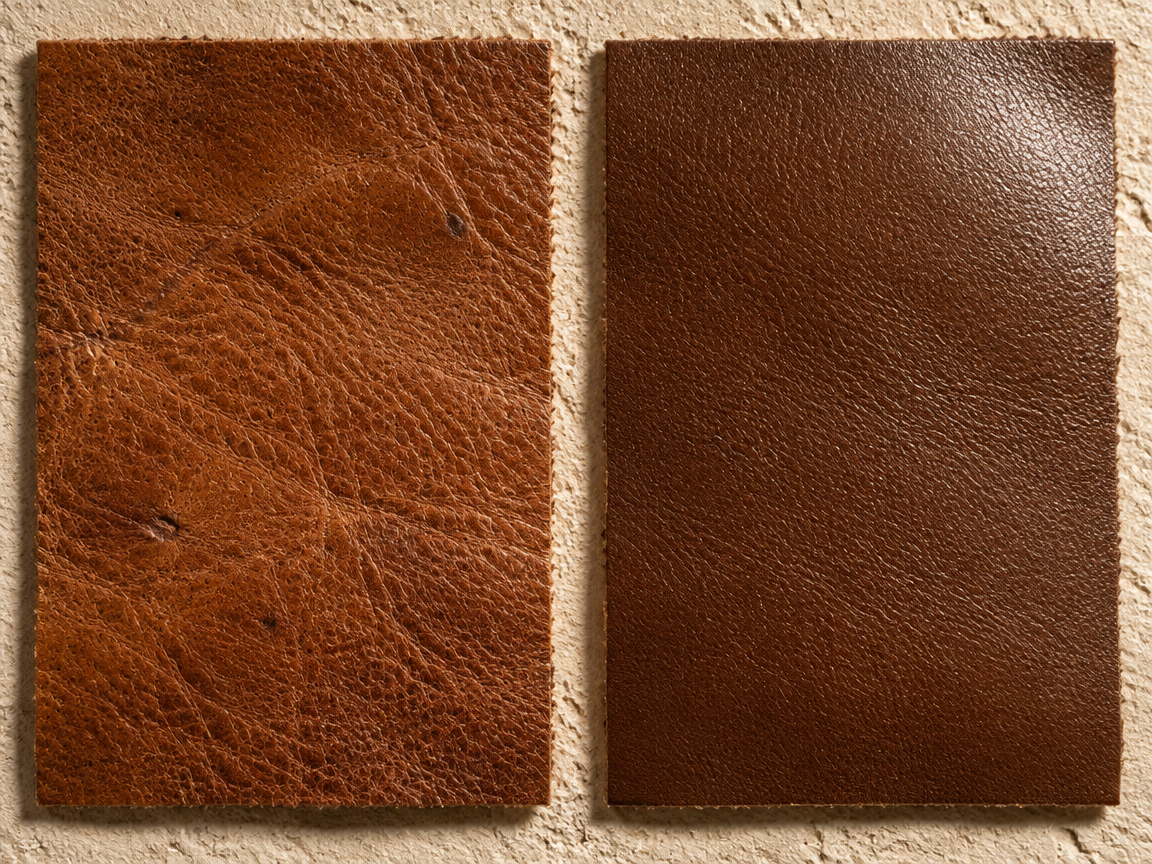
Aniline leather is the most beautiful and the least forgiving: open-pored, it takes on marks and patina together. Semi-aniline keeps the grain and adds a light pigment coat, which is the sensible middle for a family room. Pigmented or protected leather is the most resilient and the least alive. If the sofa will take sun, pets and daily use, semi-aniline is usually the honest answer.
4. Check what happens at the door
Measure the narrowest doorway on the route in, then the stair turn, then the lift if there is one. A sofa needs its height plus a few inches of clearance to pass through at an angle. Every product page lists overall width, depth and pack dimensions so you can do this before you order rather than on delivery day.
5. Read the construction, not the adjectives
A kiln-dried hardwood frame and sinuous steel springs will outlast a softwood frame with elastic webbing, and the difference is invisible from three feet away. Where a maker will not name the frame, the suspension and the foam density, assume the cheapest of each.
Keep reading
Comfort
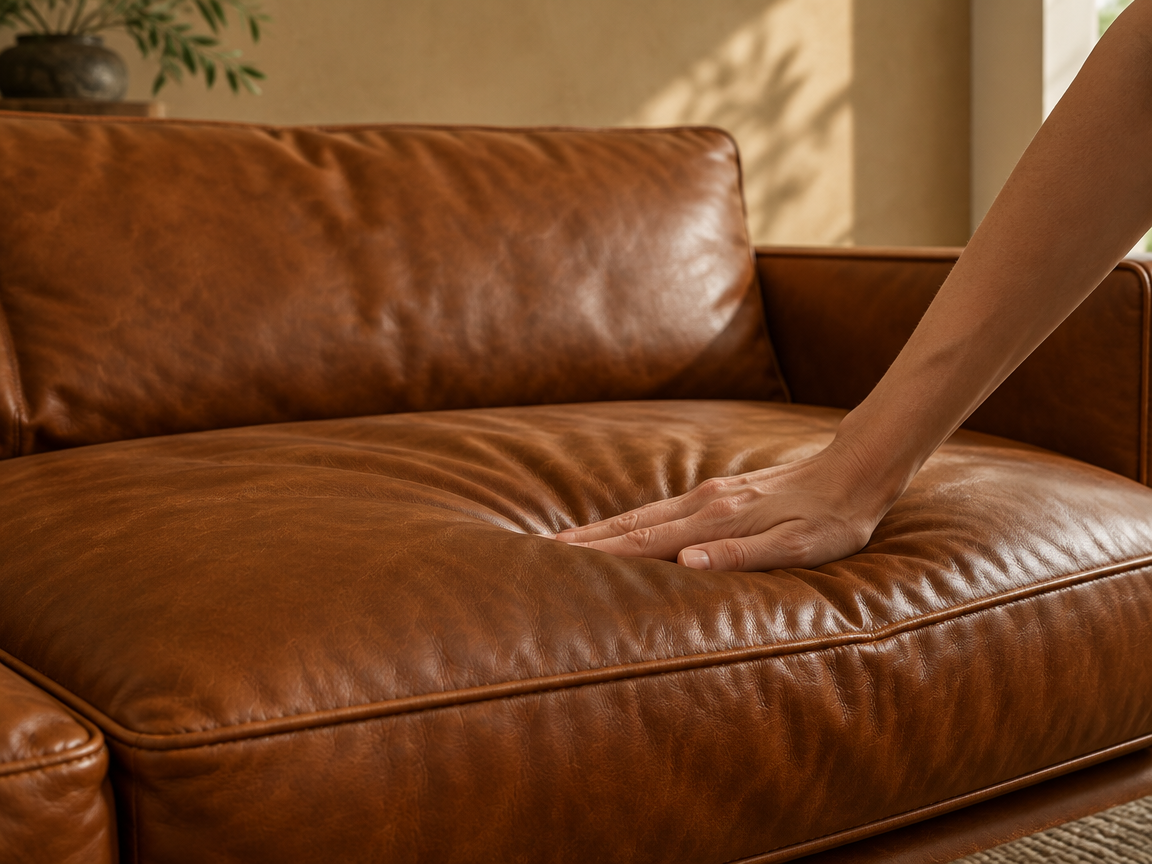
What makes a sofa comfortable
Comfort is four measurements and one material decision — seat depth, seat height, back angle and cushion fill.
Materials
Aniline vs semi-aniline leather
Same hide, different finish. One is left open and takes on everything; the other keeps the grain and gains a thin protective coat.