Materials
The leather guide
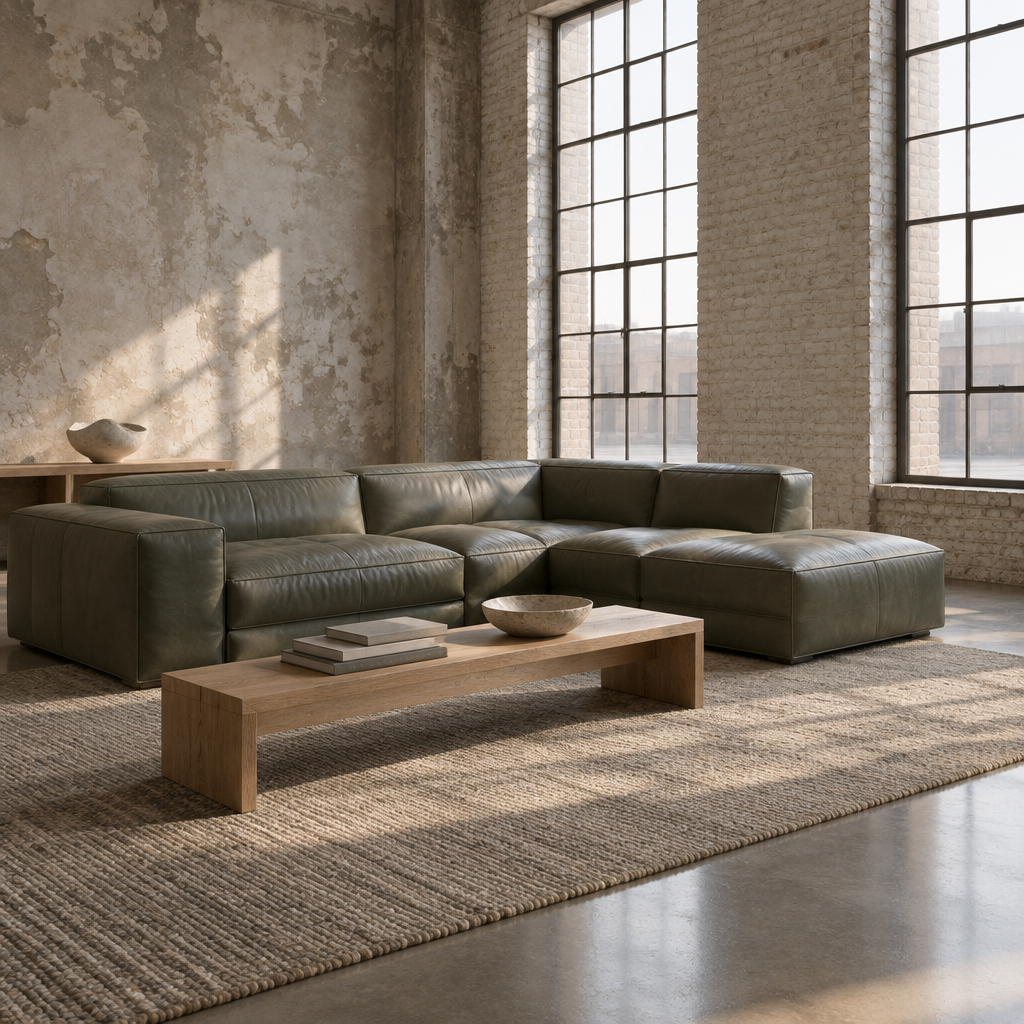
Grade and finish are two different decisions, and the words are used loosely by most sellers. This page separates them: what each leather is, how it looks and feels, how it ages, and what it asks of you.
Grade and finish are not the same thing
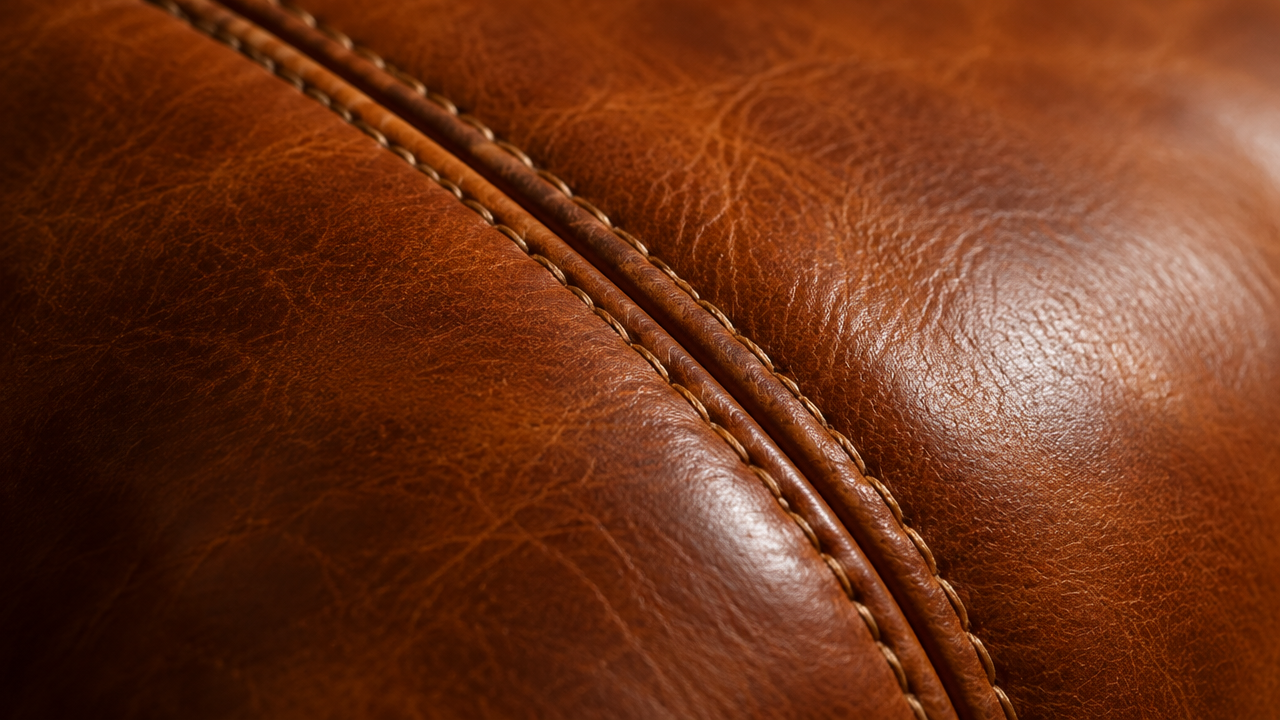
Grade describes which layer of the hide you are touching: full-grain, top-grain or split. Finish describes what has been done to the surface afterwards: aniline, semi-aniline or pigmented.
A semi-aniline sofa is usually top-grain. An aniline sofa is usually full-grain. The two words answer different questions — which is why “genuine leather” tells you almost nothing, and why “premium leather” tells you nothing at all.
Durability comes mostly from the grade. Appearance and maintenance come mostly from the finish. Choose the finish for your household, then insist on a good grade.
Full-grain leather
GradeThe whole top layer of the hide, grain intact, with the strongest fibre structure a hide has.
Full-grain is the outermost layer of the hide, left whole. Nothing is sanded away, so the tightest, most durable fibres stay in place. The surface you touch is the animal's own grain.
- Look
- Visible pores of uneven size, healed scars, growth marks, and a tone that shifts across the hide rather than sitting flat.
- Feel
- Firm, dry and slightly waxy at first. It softens quickly where it is used most.
- Patina
- The deepest of any leather. Oils from hands and light darken it unevenly within a year or two.
- Durability
- The highest of the leather grades, provided the hide itself was sound.
- Maintenance
- Condition sparingly with a leather cream. Marks can be eased but rarely removed.
Strengths
- — Longest life
- — Genuine grain and character
- — Improves with use
Trade-offs
- — Visible natural marks
- — Least stain-resistant
- — Costs the most
Best for Rooms where the piece will be looked after and allowed to age.
Top-grain leather
GradeThe top layer, lightly sanded to even the surface before finishing. The usual choice for premium upholstery.
Top-grain keeps the same top layer as full-grain but is sanded very lightly to remove small irregularities, then finished. The grain is real, just levelled.
- Look
- Even, consistent grain with fewer scars and less variation across the panels.
- Feel
- Softer and more uniform than full-grain, with a smoother hand.
- Patina
- Moderate — it deepens in colour but not as dramatically as full-grain.
- Durability
- High. The finishing step adds protection without removing much of the fibre.
- Maintenance
- Straightforward: dust, wipe spills promptly, condition once or twice a year.
Strengths
- — Consistent appearance
- — Good durability
- — More forgiving than full-grain
Trade-offs
- — Less natural character
- — Can feel closer to a finished surface
Best for Most homes — the practical middle of the market.
Aniline leather
FinishDyed through with no surface pigment. Every pore and mark stays visible.
Aniline is a finishing method, not a grade: a hide (usually full-grain) is dyed in a bath and left almost bare, with only a light wax or oil on top. Nothing is painted over the grain.
- Look
- Translucent colour that shifts with the light, pores clearly visible, marked tonal variation.
- Feel
- Supple, warm, and slightly tacky in a good way — it grips rather than slides.
- Patina
- Exceptional. This is the leather that develops a visible history.
- Durability
- Structurally strong, but unprotected against stains and fading.
- Maintenance
- Highest of any leather. Blot spills immediately; keep out of direct sun.
Strengths
- — The most beautiful surface
- — Deep patina
- — Fully breathable
Trade-offs
- — Stains readily
- — Fades in sun
- — Not for pets or young children
Best for Considered, low-traffic rooms and adults-only households.
Semi-aniline leather
FinishAniline-dyed, then given a thin pigment coat. Grain stays visible; staining drops sharply.
The hide is dyed through, then a very thin layer of pigment is applied and sealed. Enough to even the colour and slow absorption, not enough to hide the grain.
- Look
- Richer and more even than aniline, with pores and natural markings still readable at close range.
- Feel
- Smooth with a soft sheen. Less grippy than aniline, softer than a protected finish.
- Patina
- Gradual and gentle — colour deepens and the surface gains a soft polish.
- Durability
- Very good for domestic use, including households with children.
- Maintenance
- Wipe with a damp cloth, dry immediately, condition once a year.
Strengths
- — Balanced look and resilience
- — Wipeable spills
- — Keeps real grain
Trade-offs
- — Less dramatic patina
- — Some pigment coats dull with heavy abrasion
Best for Family living rooms, second homes and daily use.
Protected / pigmented leather
FinishA heavier pigment layer with a clear topcoat. Uniform, tough, and the most forgiving.
The surface is pigmented and sealed with a protective topcoat. The grain is often lightly embossed to restore texture after the pigment is applied.
- Look
- Even colour across every panel, with a visible sheen and less visible pore detail.
- Feel
- Smooth to the point of slick, cooler to the touch, and very consistent.
- Patina
- Minimal. The surface stays much as it arrived.
- Durability
- The highest of any finish. Resists stains, scuffs and fading well.
- Maintenance
- The lowest. Damp cloth and a pH-neutral leather cleaner when needed.
Strengths
- — Very hard-wearing
- — Easy to clean
- — Consistent colour
Trade-offs
- — Less character
- — Does not develop a patina
- — Can look synthetic up close
Best for Rental properties, busy households, commercial spaces.
Split leather
GradeThe lower layer of the hide, after the top grain has been separated. Often embossed with a grain pattern.
When a hide is split, the top layer becomes full-grain or top-grain and the fibrous lower layer becomes split leather. It has no natural grain of its own, so a pattern is usually embossed or printed into it.
- Look
- A repeating, regular grain — the same pattern across every panel rather than a unique surface.
- Feel
- Softer and flatter than a grain leather, with less spring.
- Patina
- Little to none.
- Durability
- Moderate. The fibre structure is looser than the top layer.
- Maintenance
- Simple, since a finish is usually applied.
Strengths
- — Lower cost
- — Uniform appearance
Trade-offs
- — No natural grain
- — Shorter life than top-grain
- — Can peel if the finish fails
Best for Occasional-use furniture where budget leads.
Bonded leather
MaterialLeather fibres and shavings bonded to a backing with a binder, then finished. Not a hide.
Bonded leather is made from reconstituted leather offcuts and fibres, glued to a paper or fabric backing and coated. It may contain a modest proportion of real leather and a large proportion of polyurethane.
- Look
- Very uniform, with a printed grain. Rarely shows pores.
- Feel
- Thin and papery compared with a hide, and quick to soften.
- Patina
- None.
- Durability
- Limited. The surface layer can separate from the backing with use.
- Maintenance
- Wipe clean, but there is little that can be done once it begins to peel.
Strengths
- — Inexpensive
- — Uniform
Trade-offs
- — Short lifespan
- — Can peel and crack
- — Not repairable
Best for Not recommended for a piece you intend to keep.
Faux / PU leather
MaterialSynthetic polyurethane on a fabric backing. No hide, no patina, but genuine practicality.
Polyurethane is applied to a knitted or woven backing to imitate leather. Modern PU can look convincing and is used widely in contract furniture.
- Look
- Even and slightly plastic, with a printed texture. Reflective rather than absorbent.
- Feel
- Cool and smooth; it does not warm or soften the way a hide does.
- Patina
- None — it wears out rather than in.
- Durability
- Depends entirely on coating quality. Good PU outperforms poor bonded leather; neither lasts like top-grain.
- Maintenance
- Easiest of all. Soap and water.
Strengths
- — Animal-free
- — Wipeable
- — Consistent
Trade-offs
- — Can crack at flex points
- — No breathability
- — Does not age
Best for High-traffic, wipe-clean settings, or a vegan household.
See it before you commit
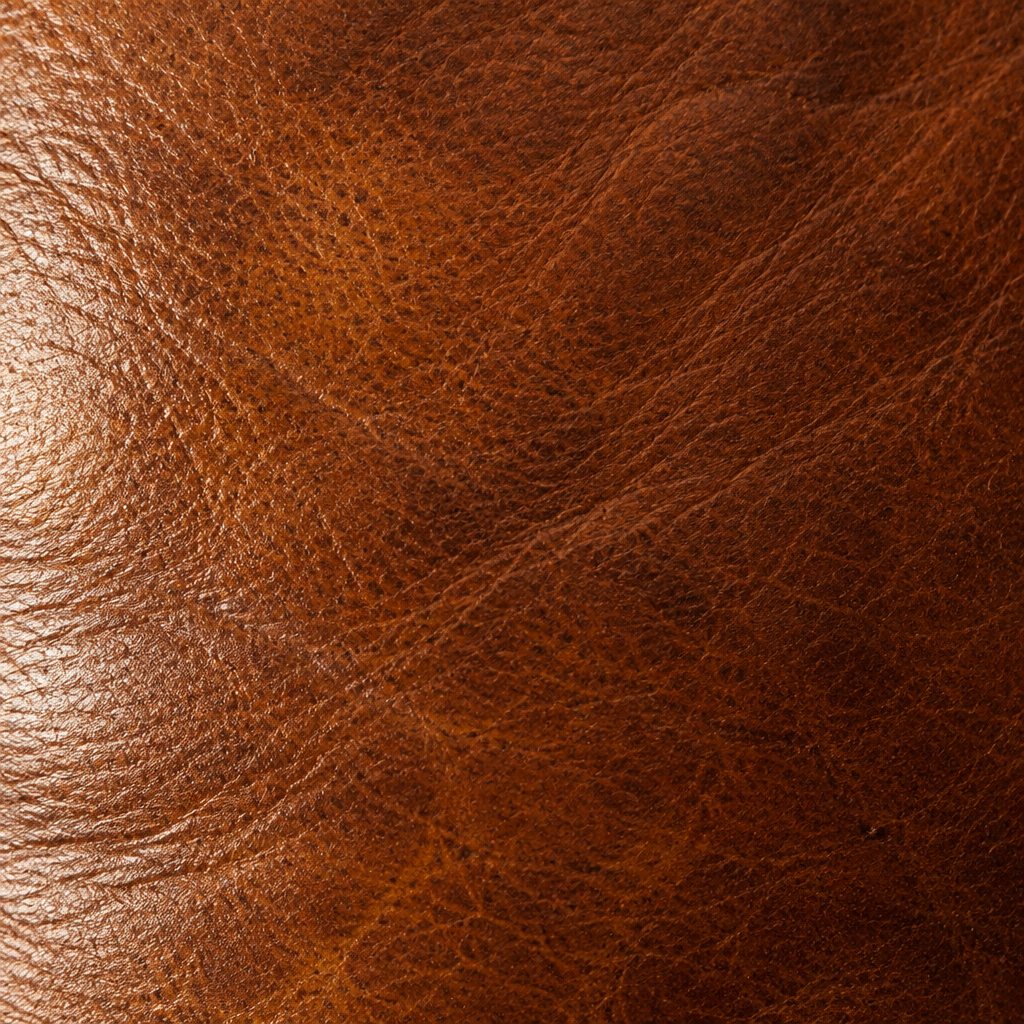
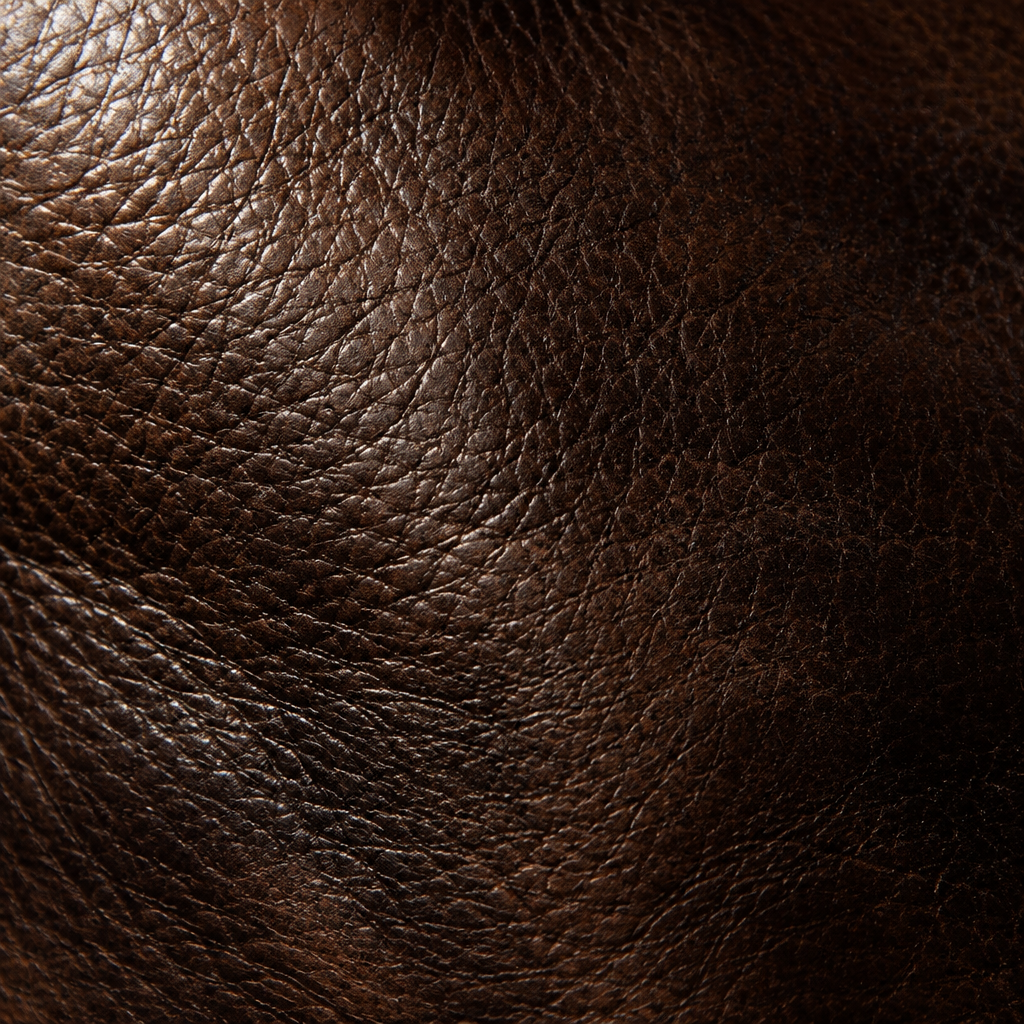
Screens misrepresent brown more than any other colour. A swatch is a cut from the same hides we upholster with — six of them, posted free, before you order anything.
Cognac
Chocolate
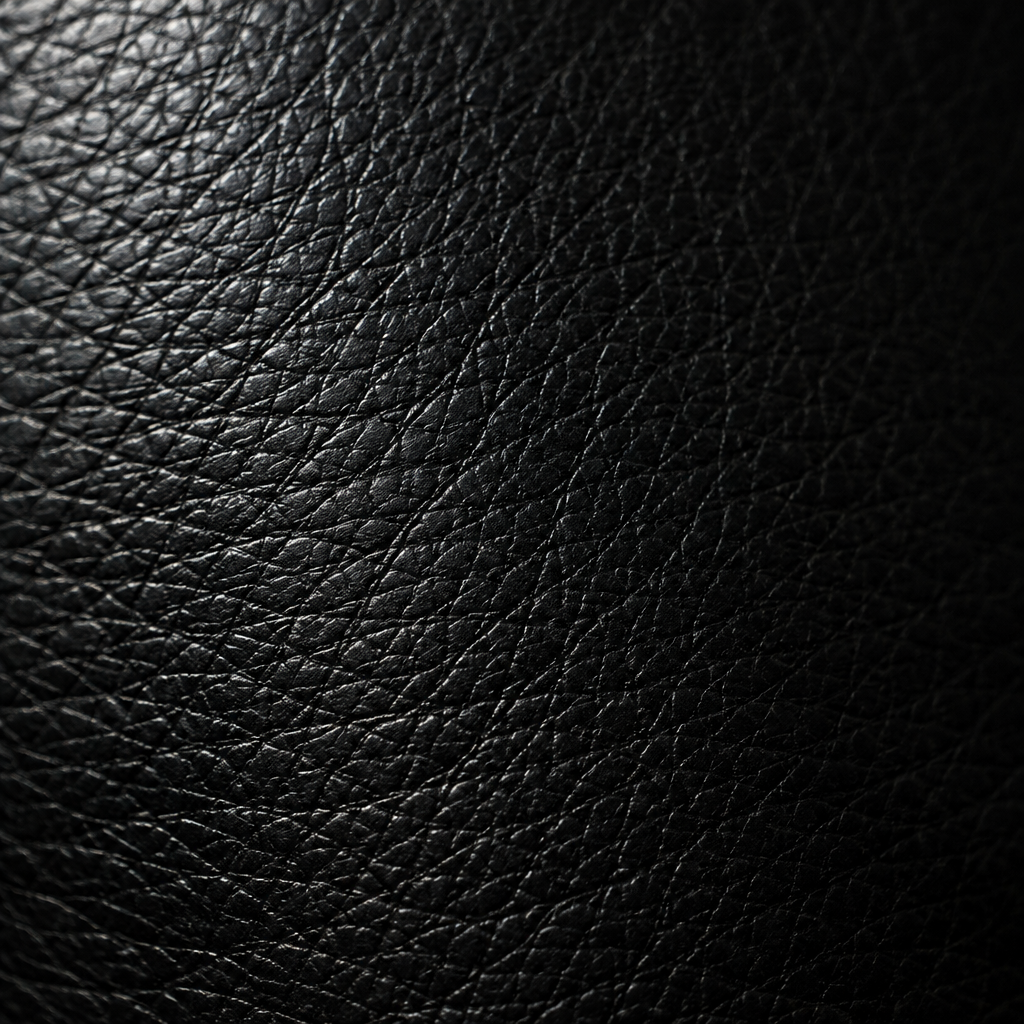
Black
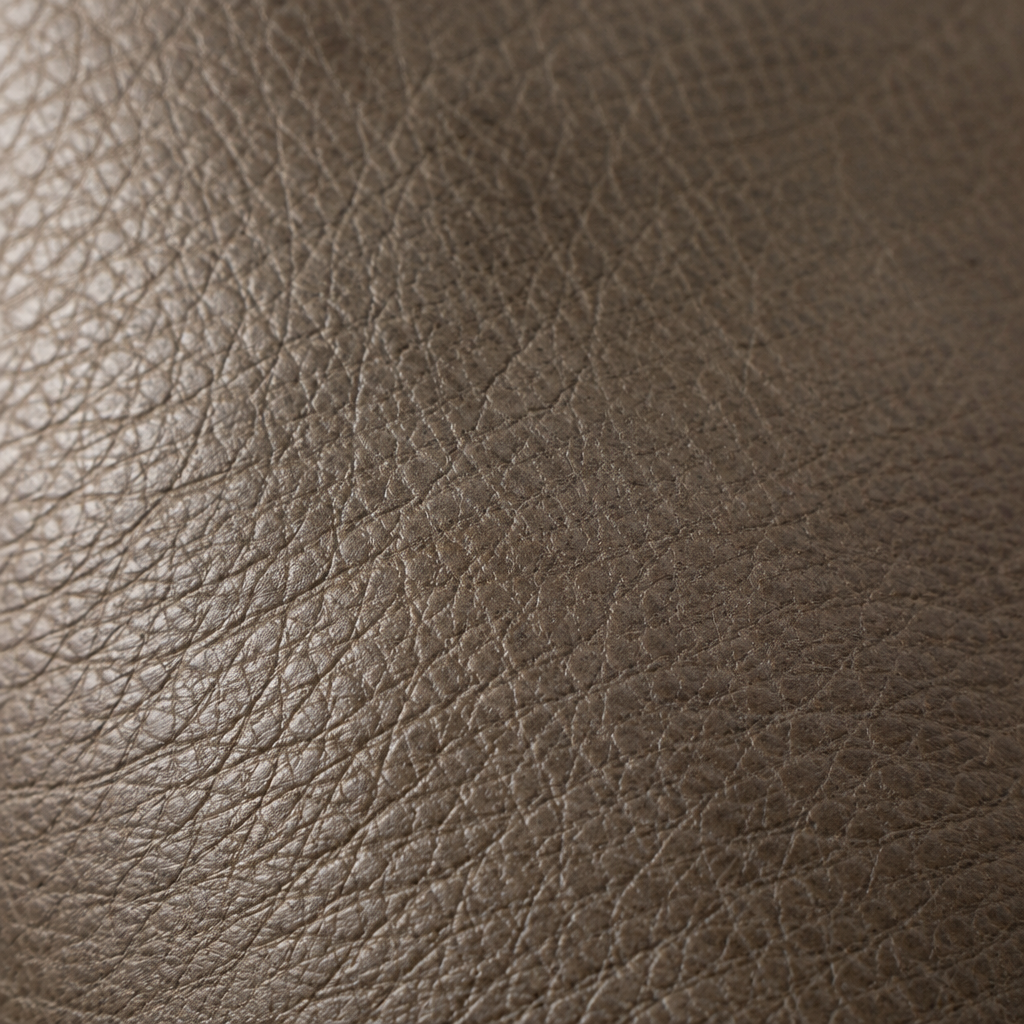
Taupe
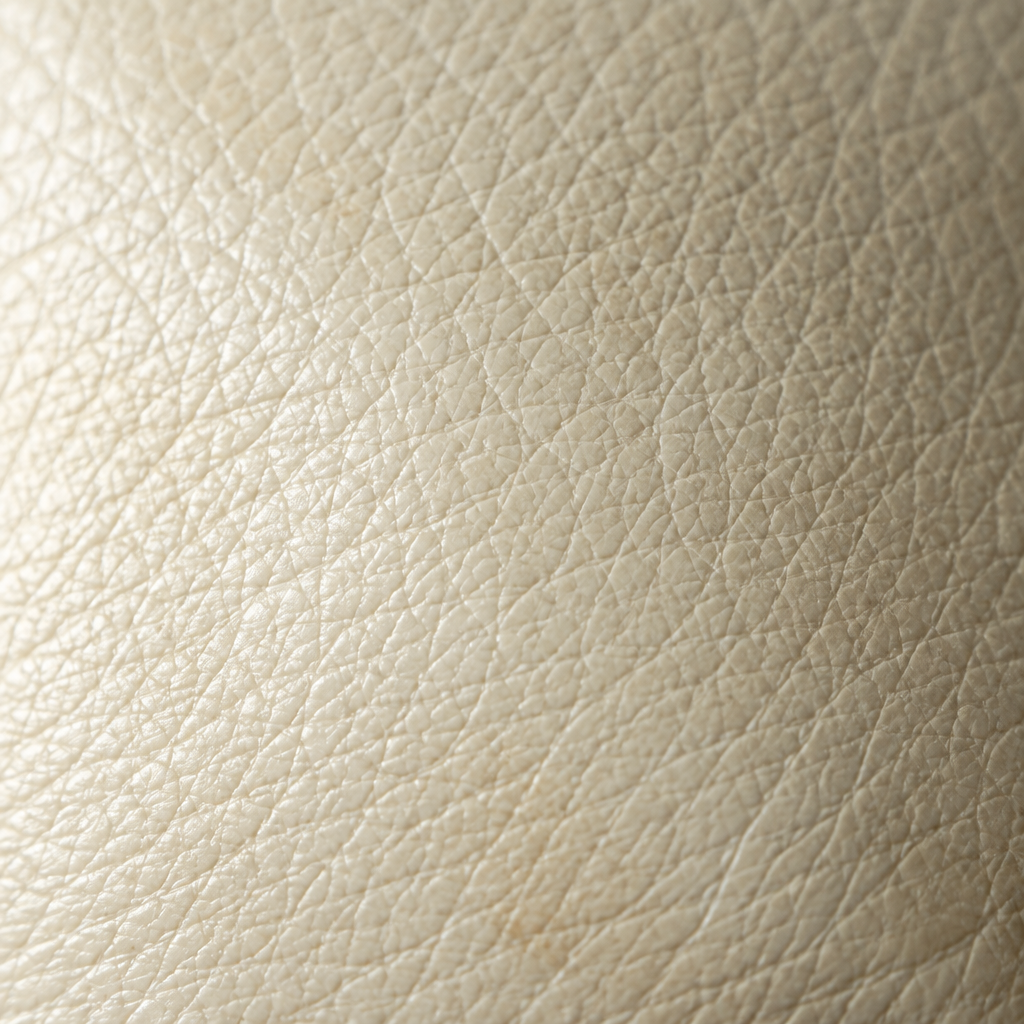
Cream
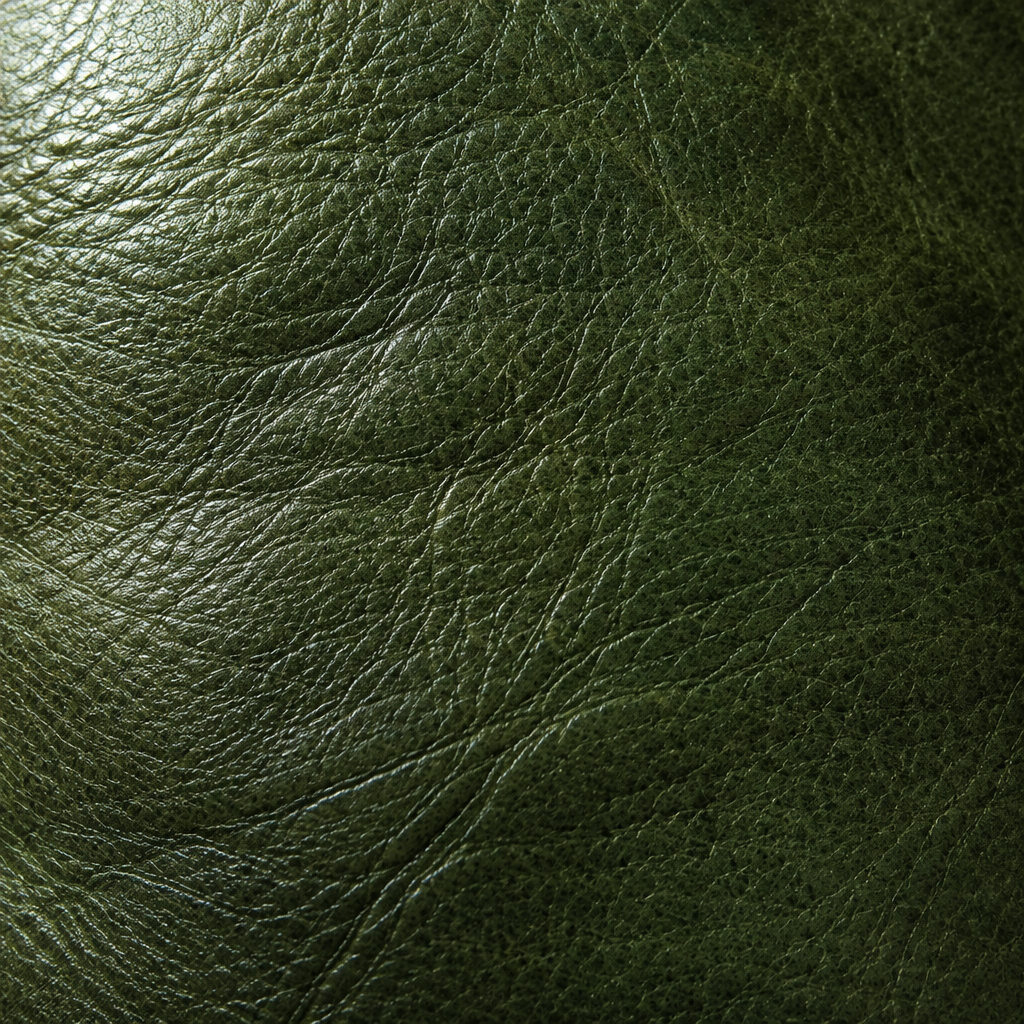
Forest
In the collection
The hide, on a piece you can measure
A finish is easier to judge on a whole sofa than on a swatch. These are the leather sofas grouped by the hides each one is cut in, with the dimensions and seat depth given for every piece.
- All leather sofasThe full range in one place: settees, three-seaters and sectionals, in every finish described above.
- Brown leather sofasCognac and chocolate in semi-aniline hides — the finishes that keep the grain visible while resisting daily marks.
- Cognac leather sofasThe warmest brown we work with. It darkens with light and reads considerably deeper in a north-facing room.
- Black leather sofasA low-sheen finish: the least forgiving of colour shifts, and the calmest under low evening light.