Aftercare
Leather sofa care
Leather is a skin: it dries, it fades, it takes on oil from hands. Very little maintenance keeps it well — but the wrong product can ruin a finish in one afternoon. This is what we tell every customer.
Dust, weekly
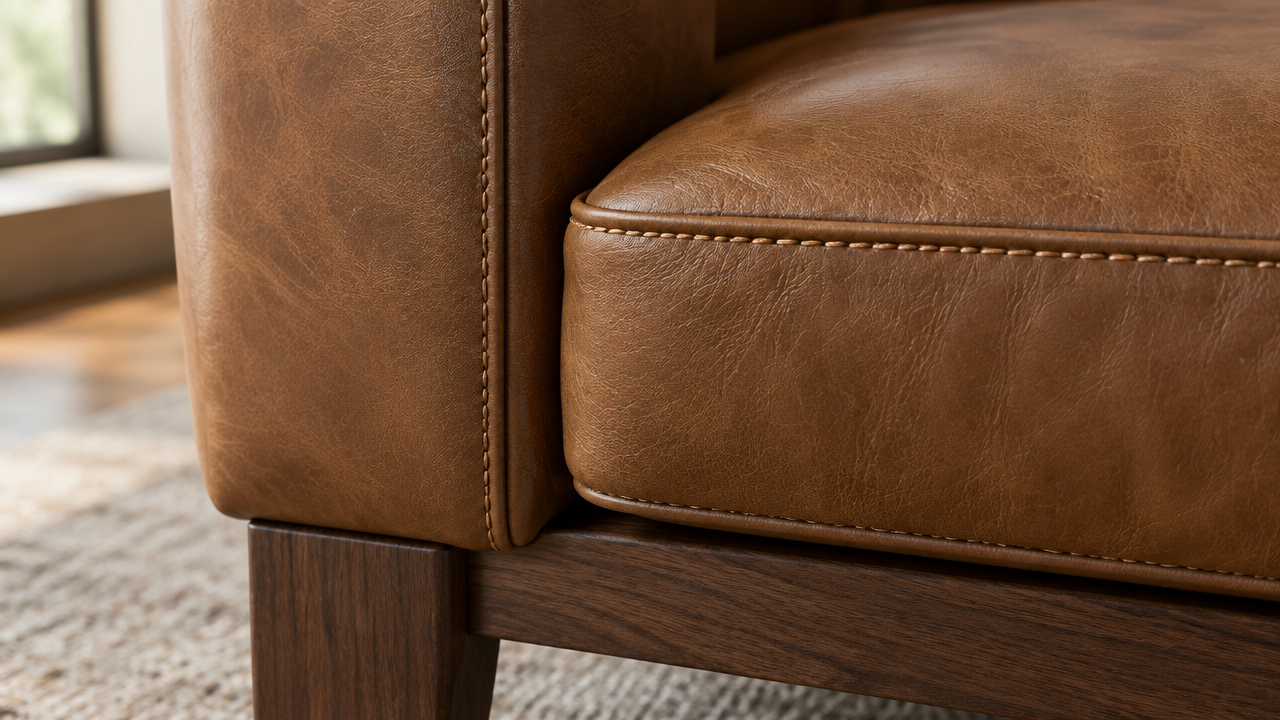
Dust settles into the grain and, over years, works like a mild abrasive. A dry, soft cloth once a week is the single most useful thing you can do. Vacuum the crevices with a brush attachment on the lowest setting.
Sunlight
Ultraviolet light fades and dries leather, and it does so unevenly — a sofa half in sun will develop a visible line. Keep pieces out of direct afternoon sun, or rotate cushions. Blinds are more effective than any conditioner.
Heat
Radiators, fires and underfloor heating dry leather from below. Keep at least 12 inches between a sofa and a heat source, and never let a hot object rest on the seat.
Spills
Blot, do not rub. Use a clean, dry, absorbent cloth and press from the outside of the spill inwards so it does not spread. Water-based spills lift easily; oil and ink need a leather specialist and are best left alone until then.
Cleaning
Use a pH-neutral leather cleaner with a soft cloth, then buff dry. Avoid household detergents, alcohol, acetone, scouring pads and all-purpose spray cleaners — they strip the finish and cannot be undone. Test anything in an unseen corner first.
Conditioning
Aniline and semi-aniline leather benefit from a leather cream once or twice a year; pigmented and protected finishes need it rarely. Apply thin layers with a soft cloth and buff off the excess. Too much conditioner softens the surface and attracts dust.
Pets
Claws mark an open-pore leather quickly. Keep a throw where a pet settles, trim claws, and accept that a semi-aniline finish will show light scratches. Most superficial marks lift with a warm, dry cloth and a little pressure.
Scratches and marks
Light surface scuffs can often be warmed away with a fingertip or a dry cloth. Deep scratches in aniline leather cannot be hidden — they become part of the patina. Do not use shoe polish or dye pens; they create a worse mark than the original.
Patina
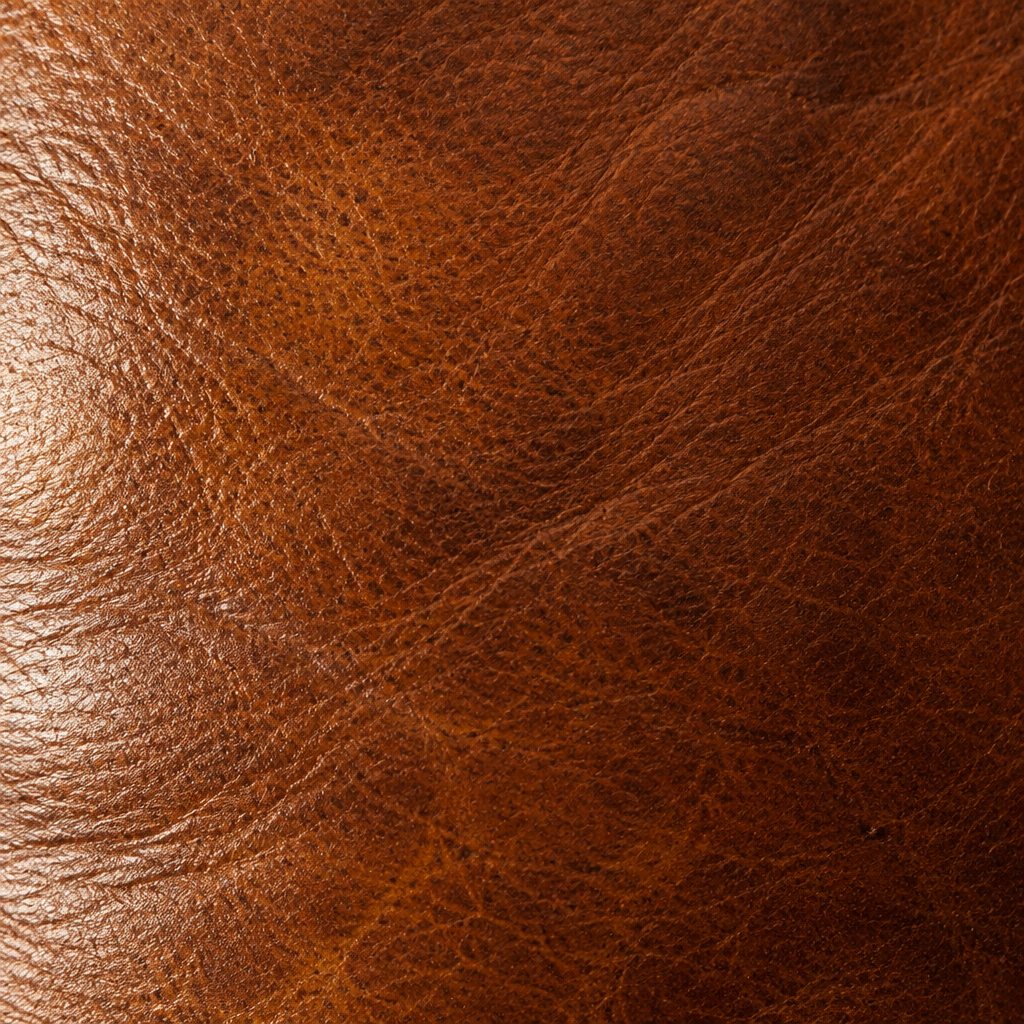
Leather darkens where it is touched and lightened by sun. Two years in, the arms and seat front will be visibly deeper than the back. This is the material behaving correctly, and it is the reason to choose leather over a coated fabric.
Storage
Store leather in a dry, ventilated room, covered with a breathable cotton sheet. Never wrap it in plastic: trapped moisture causes mould, and a sealed bag will flatten the cushions beyond recovery.
The short version
- — Dust weekly with a dry cloth.
- — Blot spills immediately, never rub.
- — Keep out of direct sun and away from heat.
- — pH-neutral leather cleaner only, tested first.
- — Condition thinly, once or twice a year.