Materials · 7 min · 21 August 2026
Aniline vs semi-aniline leather
Same hide, different finish. One is left open and takes on everything; the other keeps the grain and gains a thin protective coat.
The short answer
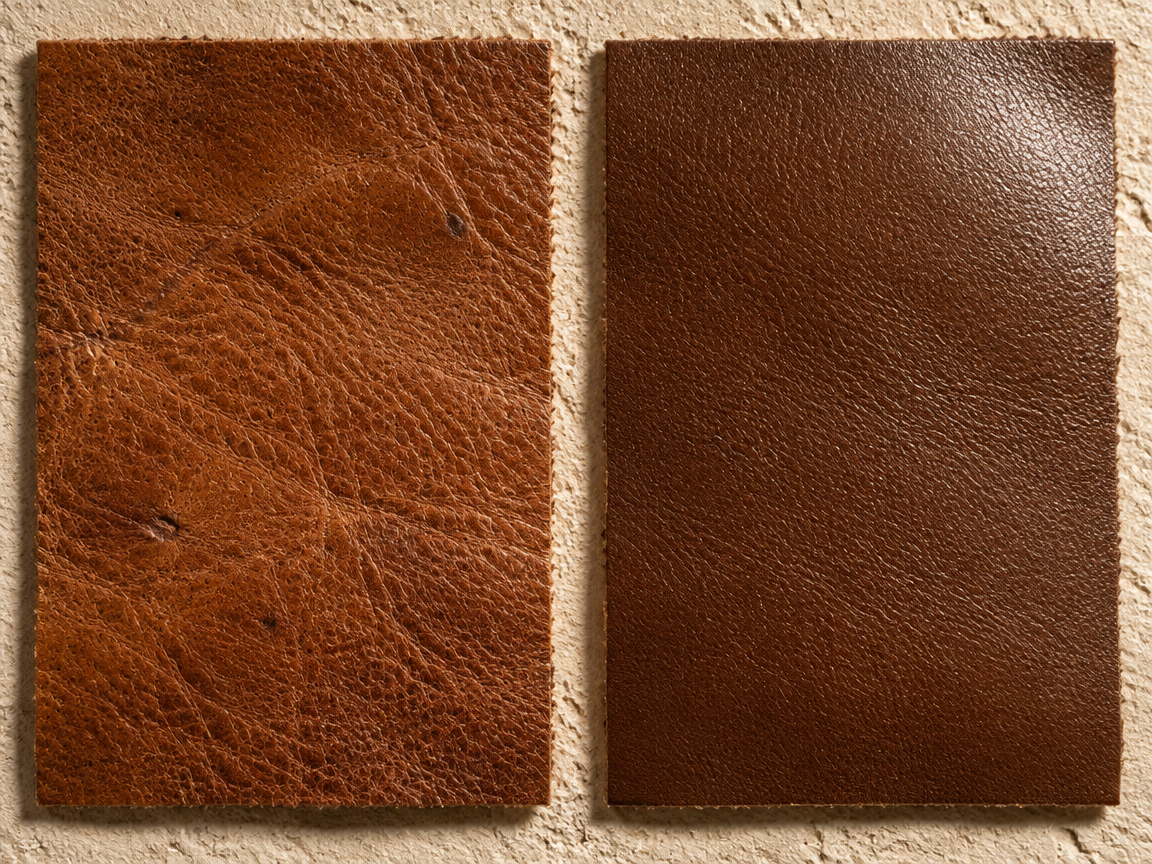
Aniline leather is dyed through with no surface pigment, so you see every pore, scar and crease, and it patinas deeply. Semi-aniline adds a thin pigment layer that evens the colour and resists staining while keeping the grain visible. Aniline is for careful rooms; semi-aniline for lived-in ones.
The word aniline describes how a hide is coloured, not how good it is. Both aniline and semi-aniline leathers are usually top-grain, and the hide quality is often the same. What differs is how much the maker is prepared to leave visible.
Aniline: the hide, unmediated
The hide is dyed in a bath and finished with little more than a protective wax or oil. Colour varies across the surface, pores are obvious, and the leather darkens where hands and light reach it. It is the most tactile option available and the most demanding: oil, ink, sunscreen and water all leave their mark if they are not dealt with quickly.
Semi-aniline: the same grain, held steady
A thin pigment coat is applied over the dyed hide, then the grain is either kept or gently embossed. The colour is more even, small spills wipe away, and the surface still shows pores and natural markings at close range. Most leather sofas sold as premium are semi-aniline for exactly this reason.
Pigmented and protected
A heavier pigment layer with a clear topcoat. It is durable and uniform, and it is what most contract and family furniture uses. It also cannot patina in the way aniline does: the surface stays as it arrived.
How to tell them apart
Look at the leather at a low angle in daylight. Aniline shows visible pores of uneven size and a slight bloom rather than a shine. Semi-aniline shows grain but a more even surface. If the surface reflects like a vinyl car seat, you are looking at a pigmented finish whatever the label says.
Neither finish is better in the abstract. Choose the one that matches how the room will actually be used, then read the care guidance before the first spill rather than after it.
Keep reading